
Category: Publications

Our spinal cord fMRI research featured on the EPFL homepage
Our work on functional MRI of the spinal cord has been featured on the EPFL homepage! In “Using brain imaging to study the spinal cord”, Michael Mitchell tells how an idea that began as a PhD hunch, that the spinal cord deserves to be imaged in its own right, has grown into a research line (…)
Second Edition of “Vertex-Frequency Analysis of Graph Signals” is available
The latest edition of the eBook Vertex-Frequency Analysis of Graph Signals, edited by Ljubiša Stanković and Ervin Sejdić, has now been published. Harry H. Behjat contributed the chapter on Signal-Adapted Decomposition of Graph Signals.

Top cited article in Bipolar Disorders
Big congrats to Luigi Saccaro for his article on hippocampal temporal dynamics using the cutting-edge micro-co-activation patterns (uCAPs) approach. The article was recognized as a top-cited article among work published in Bipolar Disorders. L. F. Saccaro, F. Delavari, D. Van De Ville & C. Piguet, “Hippocampal Temporal Dynamics and Spatial Heterogeneity Unveil Vulnerability Markers in (…)
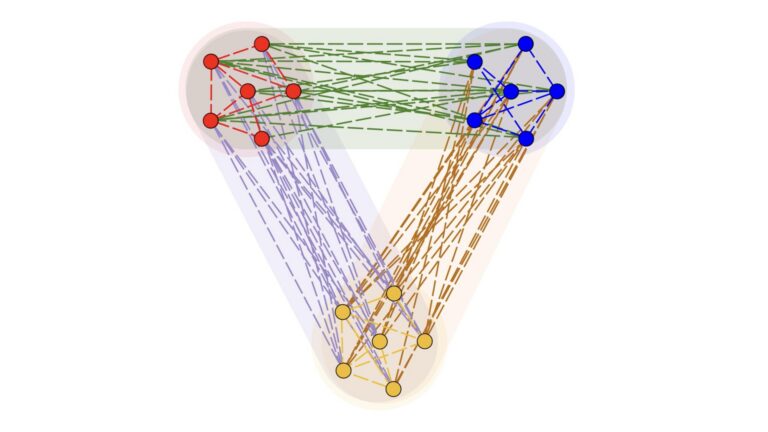
Community detection on directed networks
In a new article published in PNAS, Alex Cionca revisits the concept of modularity on directed graphs, extending it to bimodularity that recognizes sending and associated receiving communities. An elegant SVD-based algorithm allows to recover these “bicommunities” in an efficient and complete way. Big congrats to Alex and Michael Chan for pulling this off! A. (…)
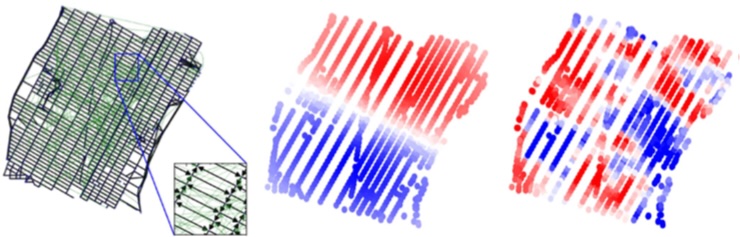
Let there be phase
In a recent paper entitled “Hilbert Transform on Graphs: Let There Be Phase” published in IEEE Signal Processing Letters, Michael Chan proposes a new twist to enable the Hilbert transform for graphs. The scheme provides a promising way to analyze signals on domains that can be characterized by directed graphs. The graph analytical signal reveals (…)
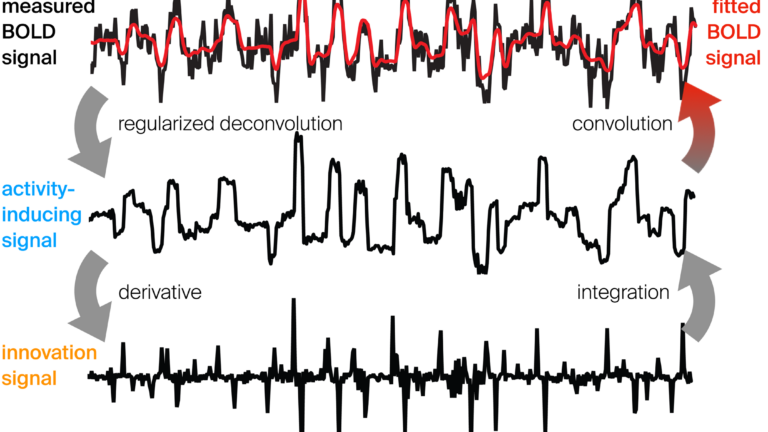
Spatiotemporal mosaic of brain states
In a new commentary piece published in Imaging Neuroscience, Dimitri and Raphaël discuss the relevance, challenges, and most promising avenues of dynamic functional connectivity approaches.